TIP
You can view a printable version of this document here.
Course description
This course enables students to further develop knowledge and skills in computer science. Students will use modular design principles to create complex and fully documented programs, according to industry standards. Student teams will manage a large software development project, from planning through to project review. Students will also analyse algorithms for effectiveness. They will investigate ethical issues in computing and further explore environmental issues, emerging technologies, areas of research in computer science, and careers in the field. from the Ontario Ministry of Education

Working with your peers this year you will build software to help others.
You will learn how to use GitHub not just to manage source code, but to track issues and manage a group software development effort.
How will I learn in this class?
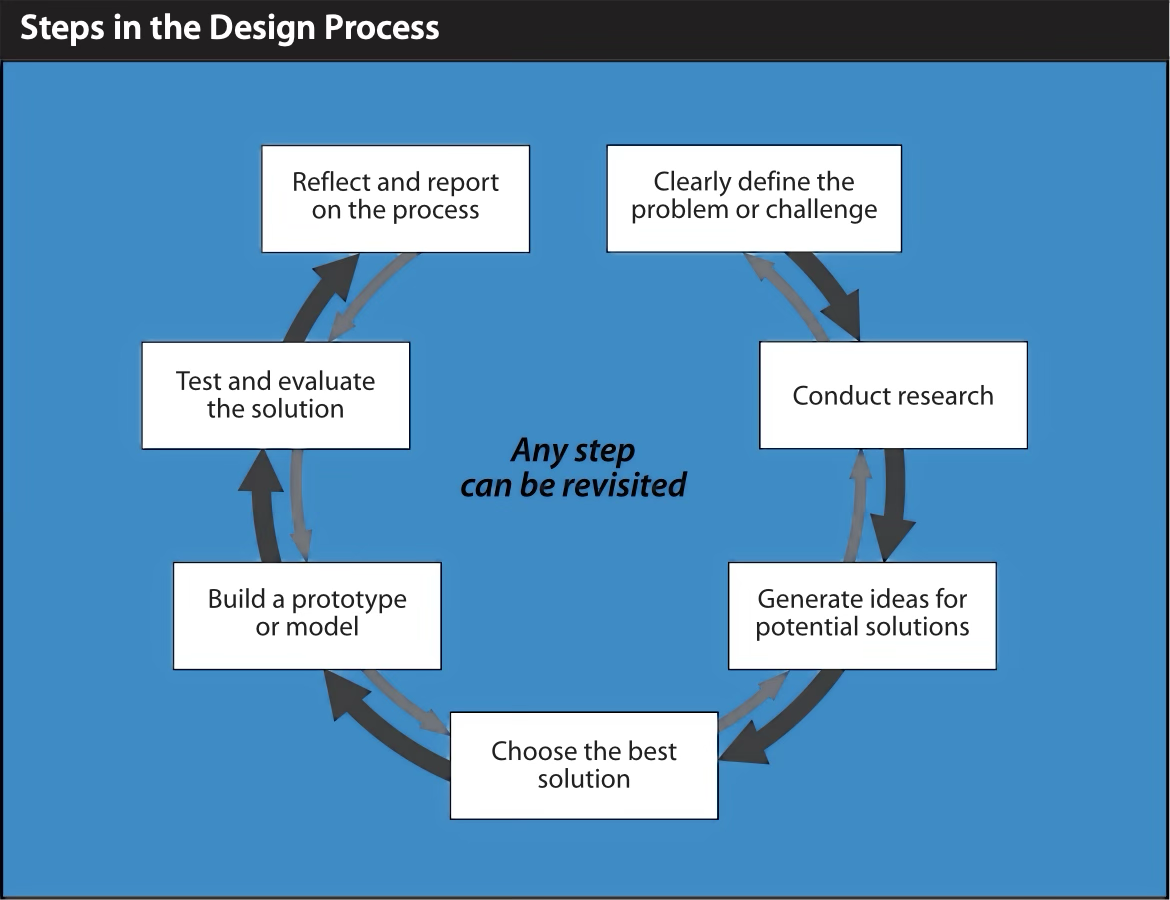
You’ll learn by making. Short tutorials or quick videos get you started; the deep learning happens when you build software that solves a real problem. You’ll iterate through the design process (define → research → ideate → choose → prototype → test → reflect), revisiting steps as needed.
We balance two complementary modes:
Lane 1 (No AI) Secure moments to verify independent skill (e.g., code reading, timed edits, vivas).
Lane 2 (AI welcome) Authentic making with modern tools; you may brainstorm, refactor, or draft with AI when you disclose and verify.
Expect frequent peer feedback, studio-style demos, and revision opportunities. Your progress is judged through observations, conversations, and products — so make your thinking visible in your portfolio, commits, unit tests*, and interviews. Process matters as much as product.
* = not what you think this is; ask Mr. Gordon to clarify
How will I be assessed and evaluated?
In 2025, software developers build portfolios of public work to get noticed. Think ahead to your first co-op job or summer job in university or college. How will you get where you really want to be? By showing what you’ve made and being able to speak clearly about your work. You’ll build a portfolio in Notion (some work public) and keep simple AI-use logs for assisted work (what you asked, what you kept/changed, how you verified accuracy). Evidence is triangulated from observations, conversations, and products. At least once per module we’ll conference privately to review evidence against course goals; you’ll propose a grade with justification.
Term work (70%)
- Each category forms 25% of the term mark.
- Evidence is triangulated from observations, conversations, and products; tasks are labeled (for/as/of) to align with Growing Success criteria.
| Lane 1 (No AI) | Lane 2 (AI welcome) | |
|---|---|---|
| Knowledge | Closed-notes vocabulary checks; short code-reading mini-checks on unseen snippets; quick Git/CLI drills; tiny “explain this error” prompts. (for/of) | Guided prompt-craft notes; compare AI explanations; annotate what you kept/edited/rejected with citations; tool workflow write-ups. (for/as) |
| Thinking | Design reasoning without tools (CRC/UML sketch, invariants, pre/post-conditions); plan fair timing tests (experiments where only the algorithm used is the variable); algorithm complexity traced on paper or whiteboard. (for/of) | Conduct interviews with stakeholders to identify requirements; iterating to improve a product; using AI to generate alternatives to solving a given problem in an efficient manner, then justifying selections with trials to collect data. (as/of) |
| Application | Time-boxed in-class feature add/refactor to a starter repo; write/repair unit tests to prove requirements; small live bug-fix. (of) | Individual features + one group project; AI-assisted refactors, scaffolds, and docs with disclosure + tests; clean modular code, PRs, reproducible builds. (for/as/of) |
| Communication | Viva voce (oral defence), protocolled discussions, note-free demos; explain code and choices clearly to a peer. (of) | READMEs, user docs, diagrams, and short screencasts polished with AI; include AI-use logs and verification steps. (as/of) |
- Lane 2 always requires disclosure in the form of an AI-use log:
prompt → what you kept/changed → how you verified. - Mixed-lane tasks are common (e.g., Lane 2 build + Lane 1 viva on the same feature).
- Unit tests are student-authored checks that prove system requirements have been met.
End of year (30%)
20% Culminating group project. Tasks may include both lanes; lane rules are explicit on each prompt.
10% Panel viva/oral defence.
| Lane 1 (No AI) | Lane 2 (AI welcome) | |
|---|---|---|
| Final two-week sprint (20%) | In-class milestone check-ins, integrity spot-checks, and small live edits to verify individual contribution; commit history and tests reviewed. (of) | Culminating group project: a focused new app or a substantial extension of prior work. AI allowed with transparent logs; user stories, modular code, CI-verified tests, PR reviews; grade reflects your contributions. (for/as/of) |
| Panel viva / oral defence (10%) | Live interview using your portfolio: code reading on an unseen snippet, a small live change, and design/ethics questions. No external tools. (of) | Prep materials and a brief post-viva reflection may use AI with disclosure; live portion remains tool-free. (as) |
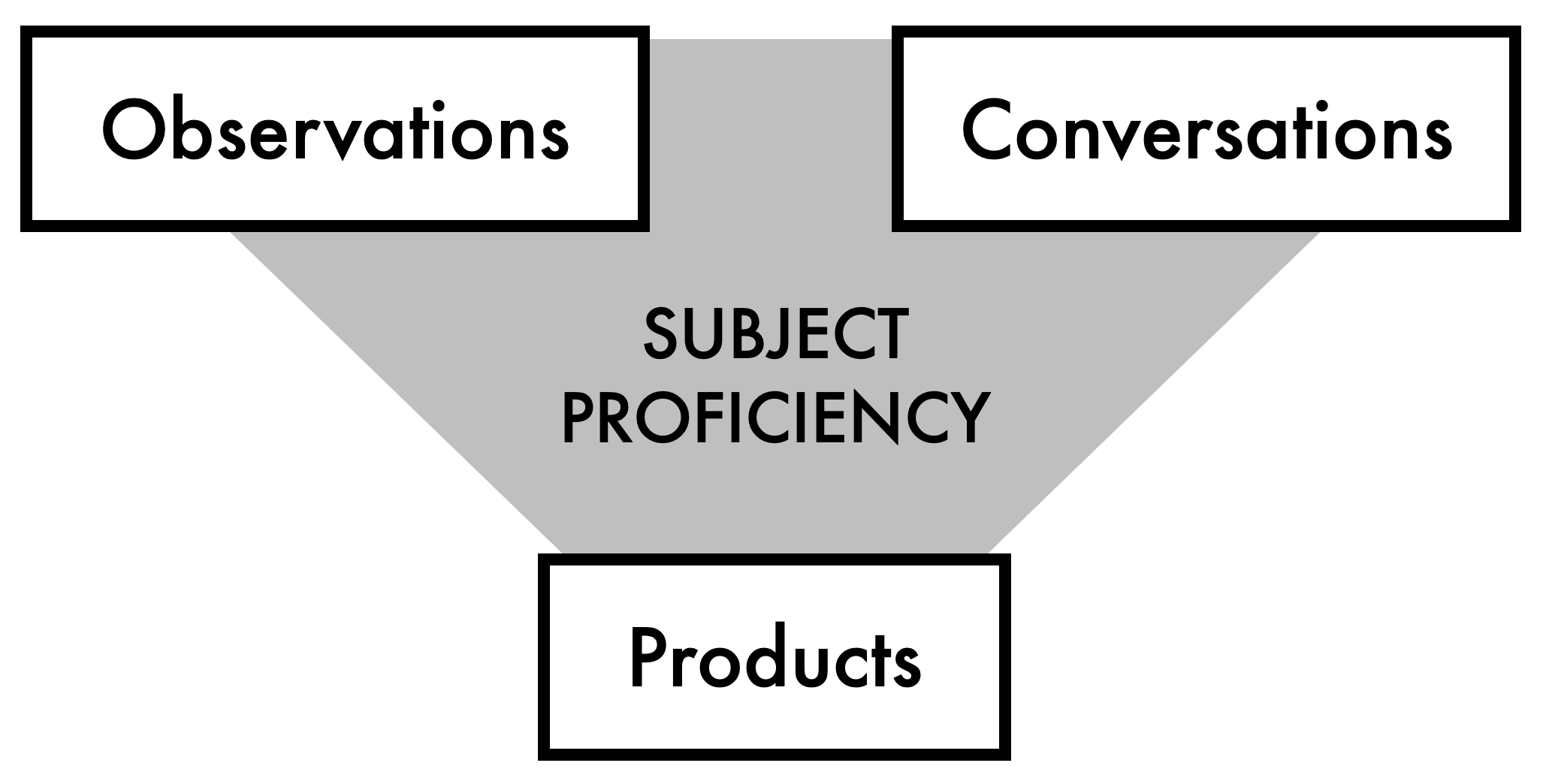
A combination of these forms of evidence is used to triangulate – that is, determine – your proficiency in this course.
Threads of Study
Rather than units of study on discrete topics, learning in this course is organized into time-based threads tied to reporting cycles at Lakefield College School. Through completion of tasks in five threads, you will progressively deepen your understanding of:
A. Programming Concepts and Skills
B. Software Development
C. Designing Modular Programs
D. Topics in Computer Science
Required Materials
| Item | Approximate Cost |
|---|---|
| Become a Select Star | $18 |
| 5 Steps to a 5: AP Computer Science Principles 2025 Elite Student Edition | $30 |